You are seeing the paginated version of the page.
It was specially created to help search engines like Google to build the proper search index.

Click to load the full version of the page
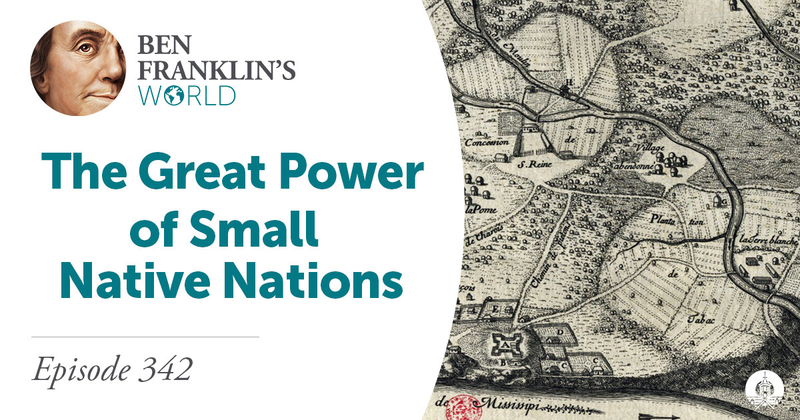
Episode 342: Elizabeth Ellis, The Great Power of Small Native Nations
Episode featuring Liz Ellis and the Great Power of Small Native Nations
Original link
Episode 401: James Fichter, Tea, Boycotts, and Revolution
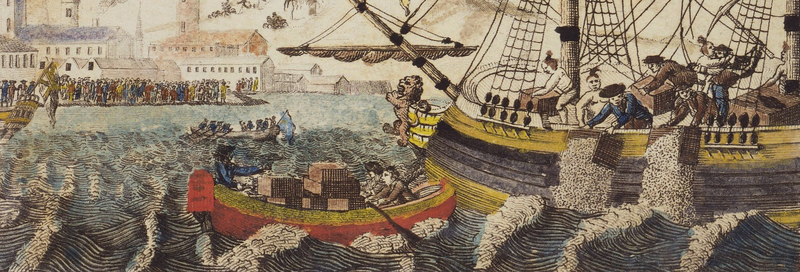
During the early days of the American Revolution, British Americans attempted to sway their fellow Britons with consumer politics. In 1768 and 1769, they organized a non-consumption movement of British goods to protest the Townshend Duties. In 1774, they arranged a non-importation and non-exportation movement to protest the Tea Act and Coercive Acts. Why did […]
Original link
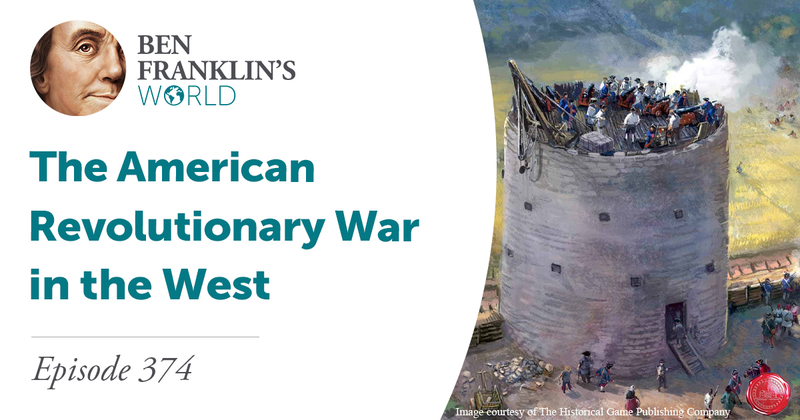
Episode 374: Stephen Kling, Jr., The American Revolutionary War in the West
Stephen Kling, Jr. guides us through an exploration of the American Revolution’s Western Theater and people and empires involved.
Original link
Episode 379: Susan H. Brandt, Women Healers in Early America
Historian Susan H. Brandt she takes us into the rich history of women healers with details from her book, Women Healers.
Original link
«E Ancipite Unum»? Some ambiguities behind the birth of the United States of America — Anglais
[Conférence] As part of the event “Celebrating US Independence in Auvergne-Rhône-Alpes,” organized by the DRAREIC of the Académie de Lyon, Guillaume Odin highlights in this lecture the multiple ambiguities behind the birth of the United States of America, from the Revolutionary War of 1775-1783 to the Civil War of 1861-1865, and the westward expansion of the 19th century.
Original link
All men are created equal? Barack Obama and the American Revolution — Anglais
Barack Obama believes that the American nation's founding documents—the Declaration of Independence and the Constitution (including the Bill of Rights)—have been the driving forces of American history and remain the foundations of American politics today. In this talk we will explore Obama's analyses of these documents and of their legacies since, in particular in relation to slavery, the Civil War, Jim Crow, and Civil Rights. We will look at the words of Barack Obama, as derived from his writings and speeches, and also at historical sources from the time of the American Revolution, through the Civil War, and to the Civil Rights era.
Original link
Race and the three phases of the American Revolution — Anglais
The American Revolution, the Civil War and Reconstruction period, along with the Civil Rights era can be seen as three phases of the same struggle for racial equality in the U.S. The Declaration of Independence established the revolutionary ideal of equality among men. This promise was not fulfilled by the Reconstruction Amendments. Some might argue that the 1964 Civil Rights Act and 1965 the Voting Rights did not bring about true racial equality. In a sense, the American Revolution can be envisioned as a work in progress.
Original link